User Engagement Strategies @ USA Today
Leading features development for user conversion, engagement, and loyalty.
Role:
Product Lead
Duration:
2 months
Tools:
Figma, Adobe, 11 Labs, Qualtrics
CONTEXT
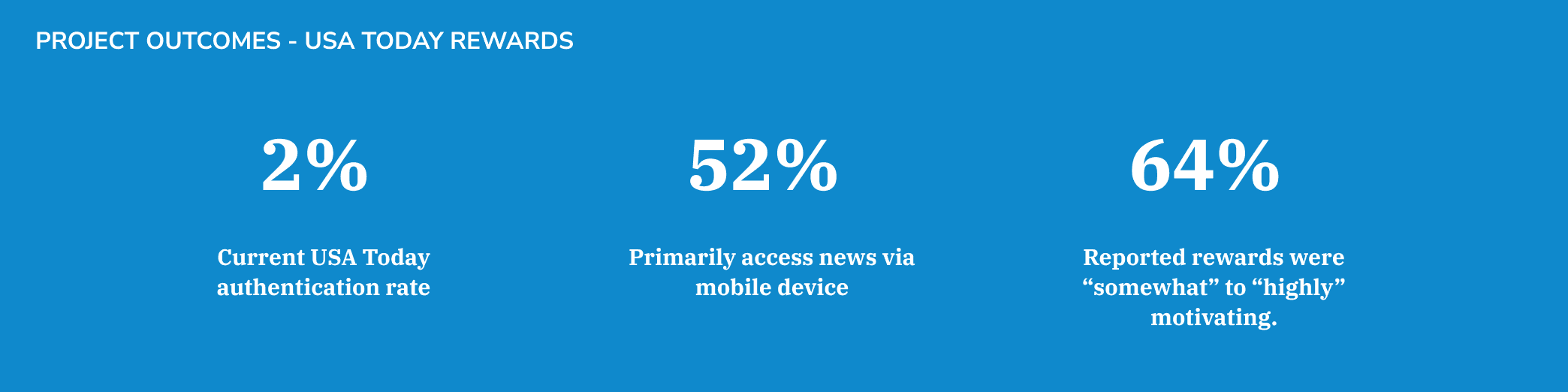
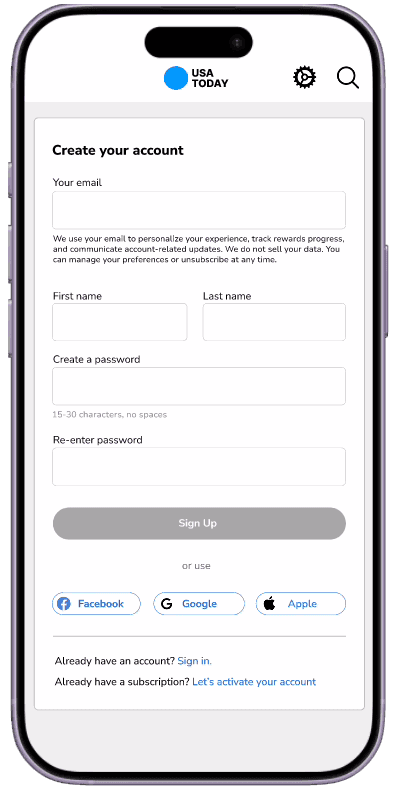
Only 2% of USA Today's app users authenticated, meaning 98% of readers were invisible to the business: no behavioral data, no personalization, no path to subscription conversion. USA Today's CX team brought this problem to our capstone course to find out why. I led product strategy and design, with a core team of two and support from about eight classmates within our 20-person course.
THE PROBLEM
The working theory was that sign-up friction was the barrier, so the fix seemed obvious: reduce sign-up steps. A 43-person survey disproved that. 48% cited spam concerns, 27% questioned data legitimacy, and 23% named privacy as their core concern. The barrier was primarily trust.
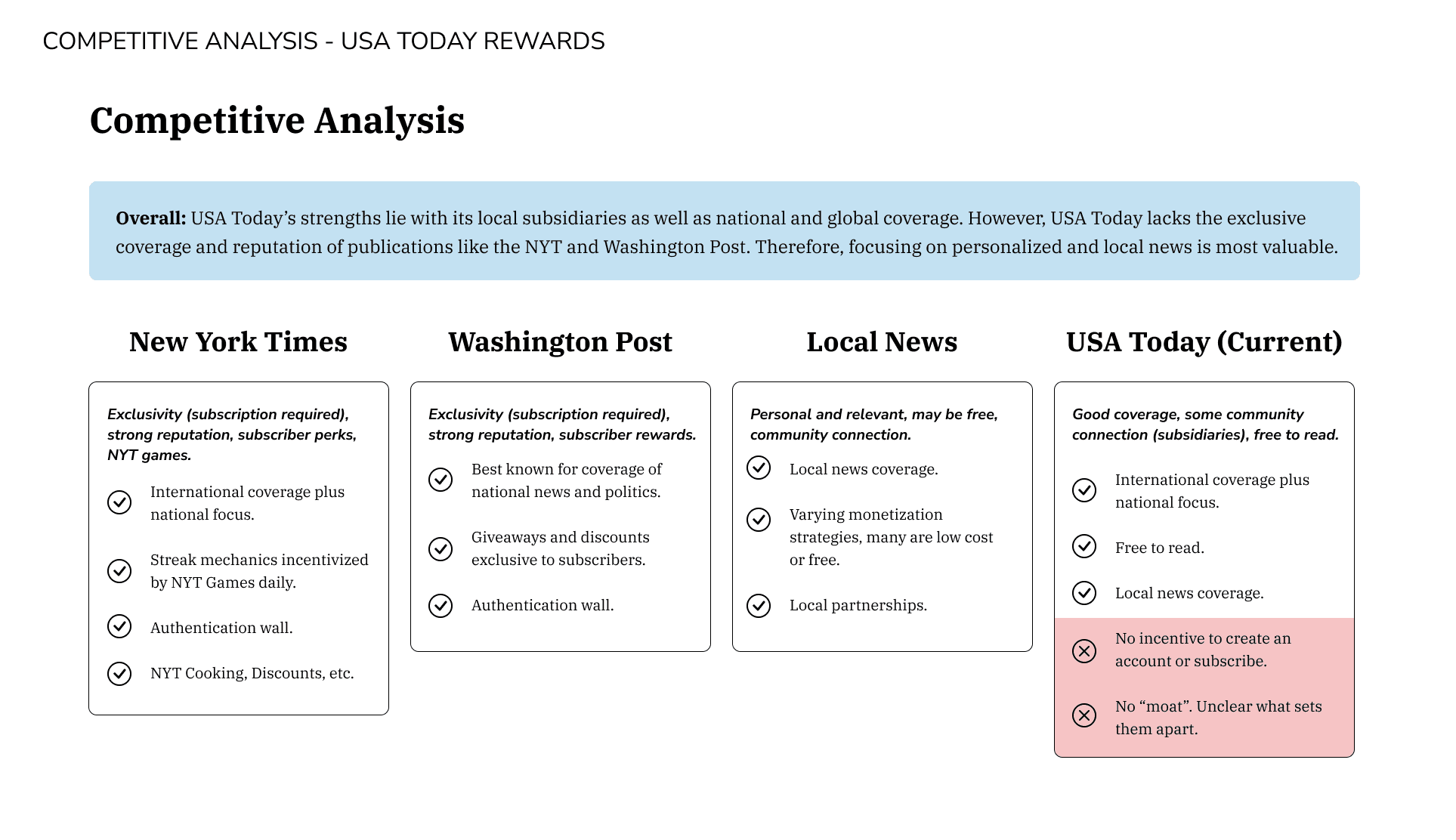
I redirected the strategy from shortening the funnel to redesigning the value exchange itself. Competitive analysis also revealed further gaps in USA Today's strategy.
WHAT I FOUND
Competitive analysis showed NYT and Washington Post already reward habitual behavior through programs like NYT Games and subscriber perks. But gamification carries a real risk for a news publication: if rewards start to feel like the point, they undercut editorial credibility.
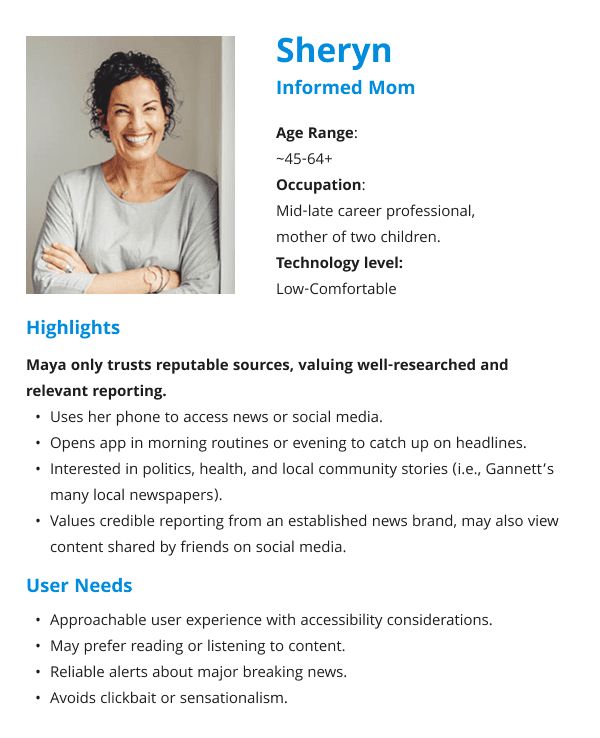
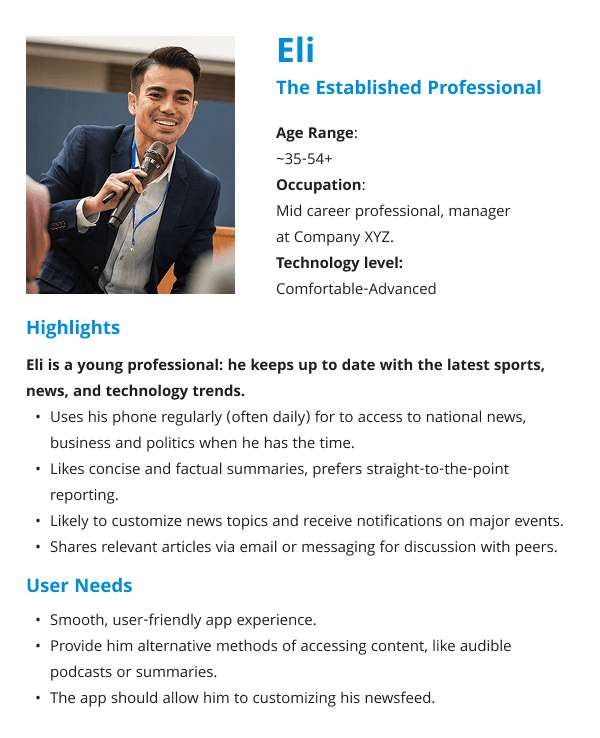
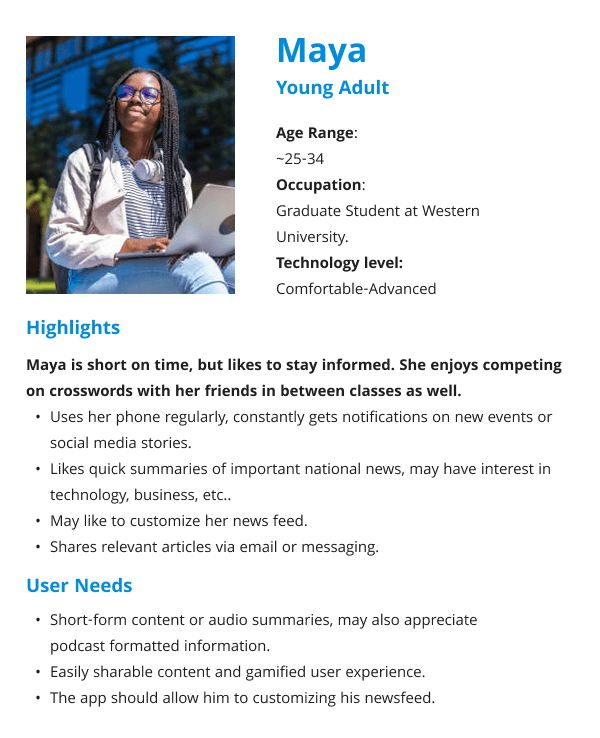
Two reader segments mattered most. Habitual readers, who already returned consistently, were the highest priority since they were large enough to move authentication rates and already inclined toward a rewards mechanic. Passive scanners were lower priority, since they don't visit often enough for rewards to accrue meaningfully. [Third persona, if you want it included]
SOLUTION
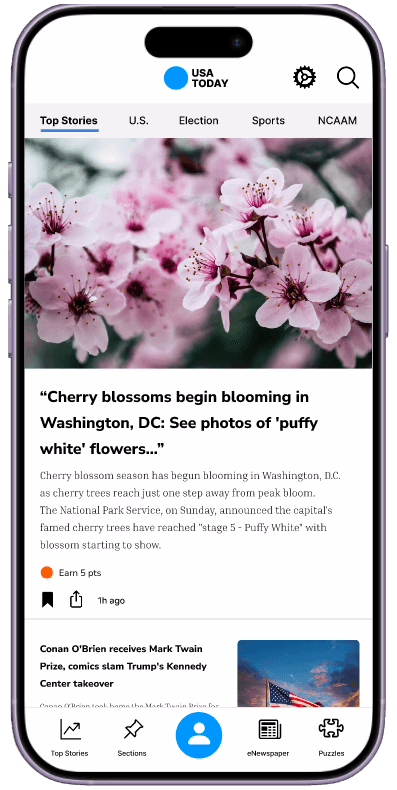
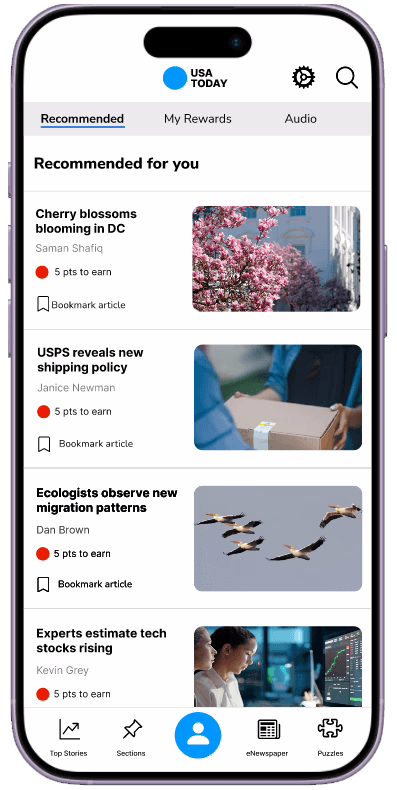
I designed a gamified rewards system around one rule: editorial content stays primary, rewards stay peripheral until a milestone is hit. Points indicators appear on the feed, before content, and after article completion, reinforcing reading behavior in the moment without interrupting it. A three-tier progression (Intern, Reporter, Editor) was designed to route toward subscription conversion rather than compete with it. I prioritized rewards over other options because they tied most directly to the authentication behavior USA Today needed to change.
OUTCOMES
84% of surveyed users named rewards their favorite feature
64% reported being somewhat to highly motivated to keep engaging long-term
Presented the final prototype to USA Today's CX team; feedback indicated real interest in the concept, though I don't have confirmation on what was implemented afterward
PROTOTYPES
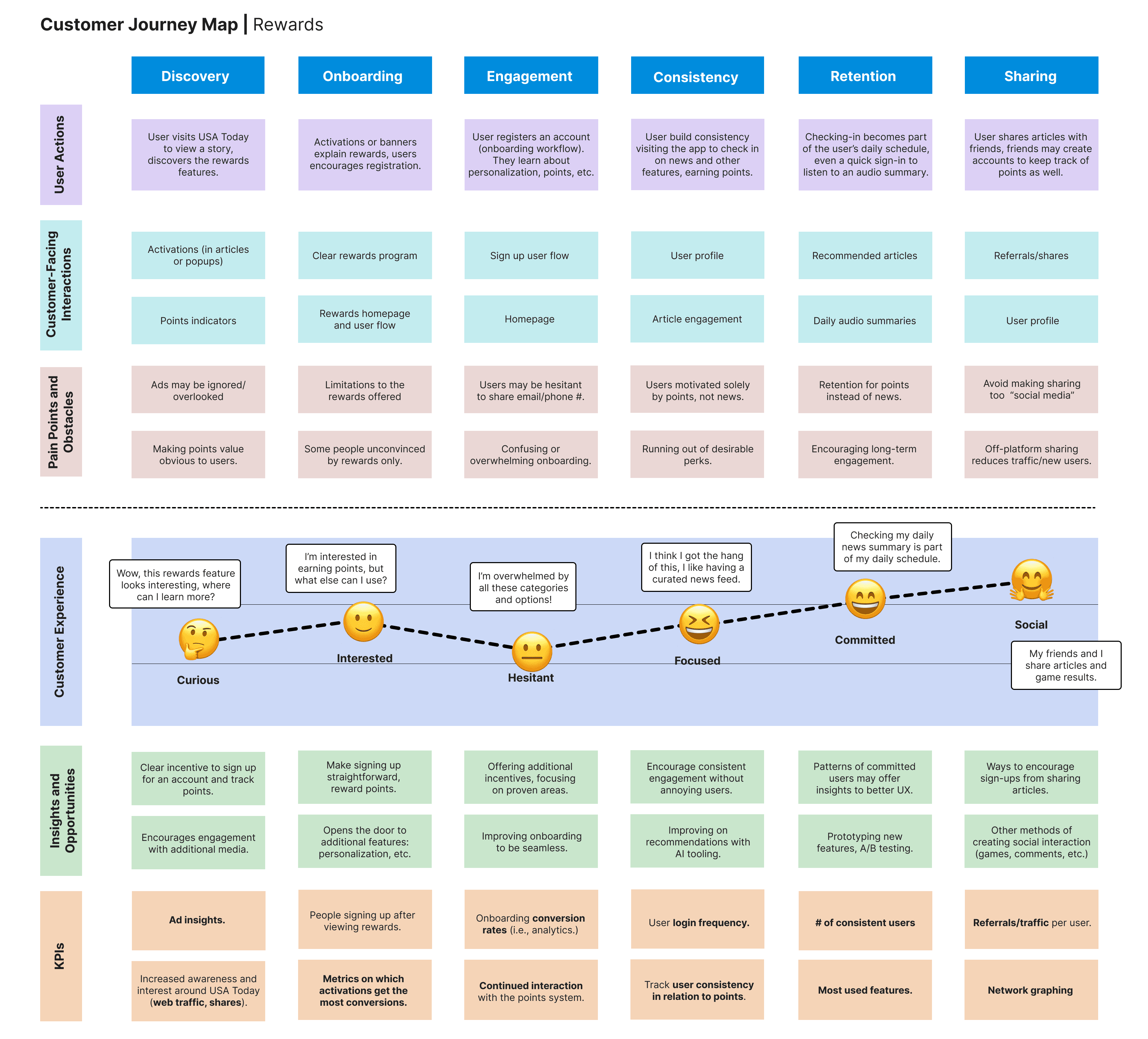
Throughout my design, I am addressing the retention and consistency stages of the journey map directly. Every screen was designed around the principle that the editorial content is always the primary experience; reward indicators are present but peripheral until a milestone is reached. The tier system (Intern → Reporter → Editor) was also designed to route toward subscription conversion.
REFLECTION
In future developments, I would like to launch this feature using an A/B testing strategy to evaluate user feedback and metrics. I would also continue exploring AI-powered functionality with recommendations, customized daily news summaries, and games. Based on user feedback, I may tweak the points user engagement strategy to meet business customer conversion, while improving user satisfaction and engagements.