Student-driven Housing
Interactive Internship Assistant and Tracking
Role:
Product Lead
Company:
Coursework Design Sprint
Tools:
Figma, Excel, Forms
OVERVIEW
At UNC, student subleasing largely happens through Facebook groups and word of mouth: informal systems poorly designed for short-term housing coordination.
I led research and product design for RamLease, a university-verified subleasing marketplace concept exploring whether structured workflows and identity verification could improve coordination reliability for student subleases.
Survey findings suggested the problem was widespread:
93.3% lived off campus
56.6% had subleased or searched for short-term housing
80% relied on word of mouth
90% said finding housing took too long
DISCOVERY
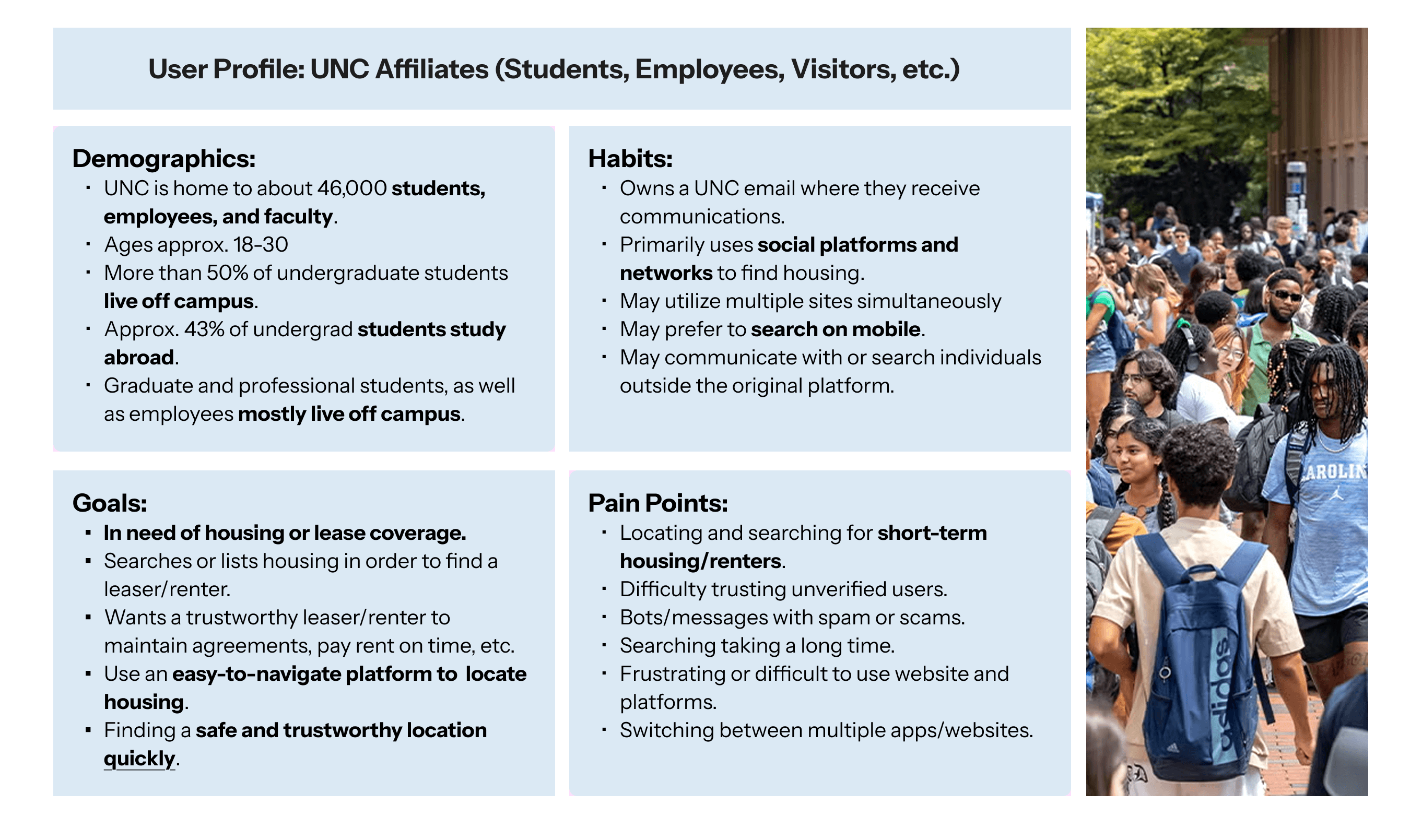
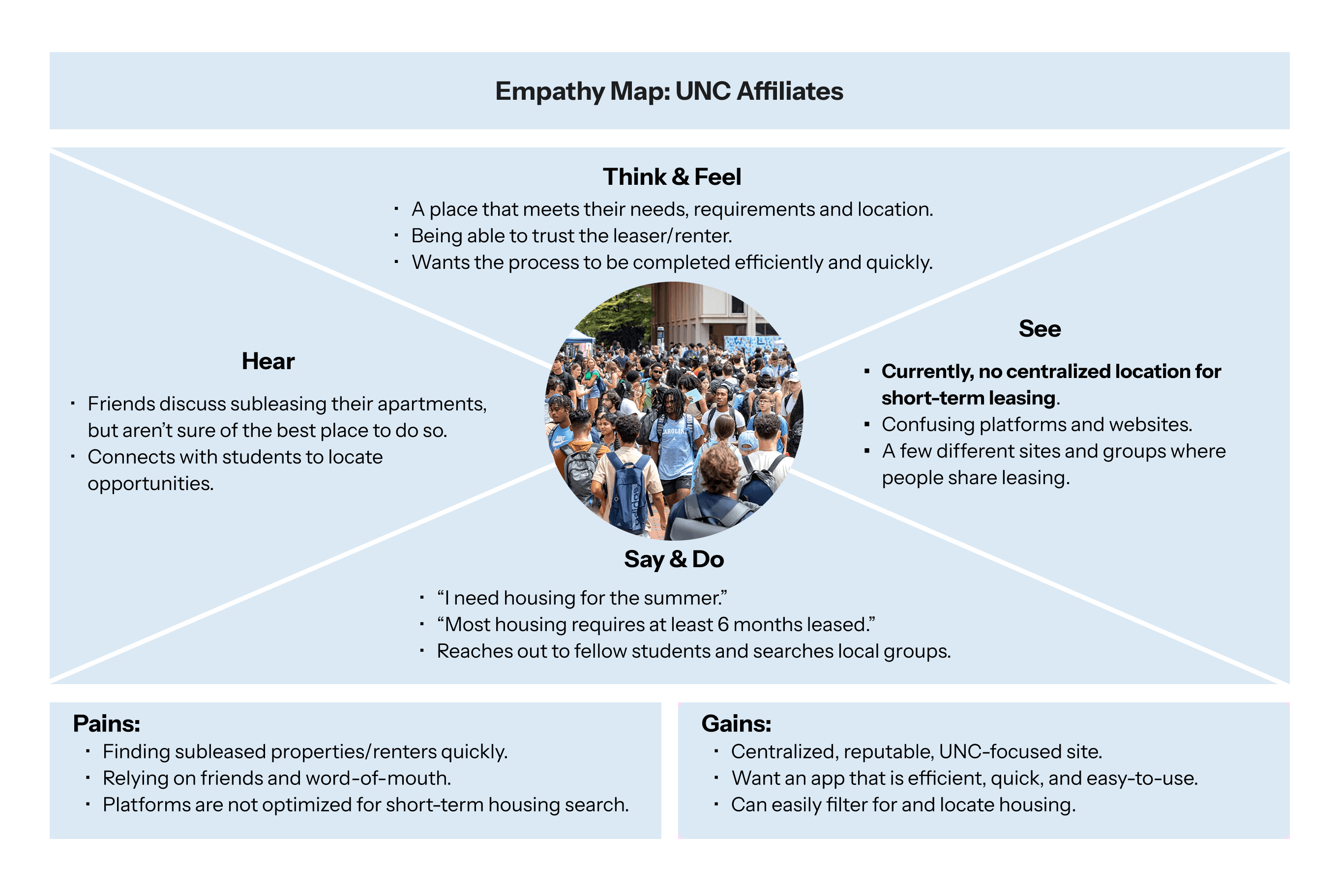
Research revealed students were not just searching for housing.
They were often:
subleasing their current apartment
WHILE searching for another place
coordinating overlapping timelines simultaneously
The core problem was coordinating temporary housing agreements through platforms never designed for subleasing workflows.
Existing platforms created recurring friction:
scattered information
unverified users
informal agreements
inconsistent communication
high coordination overhead when plans fell through
RESEARCH
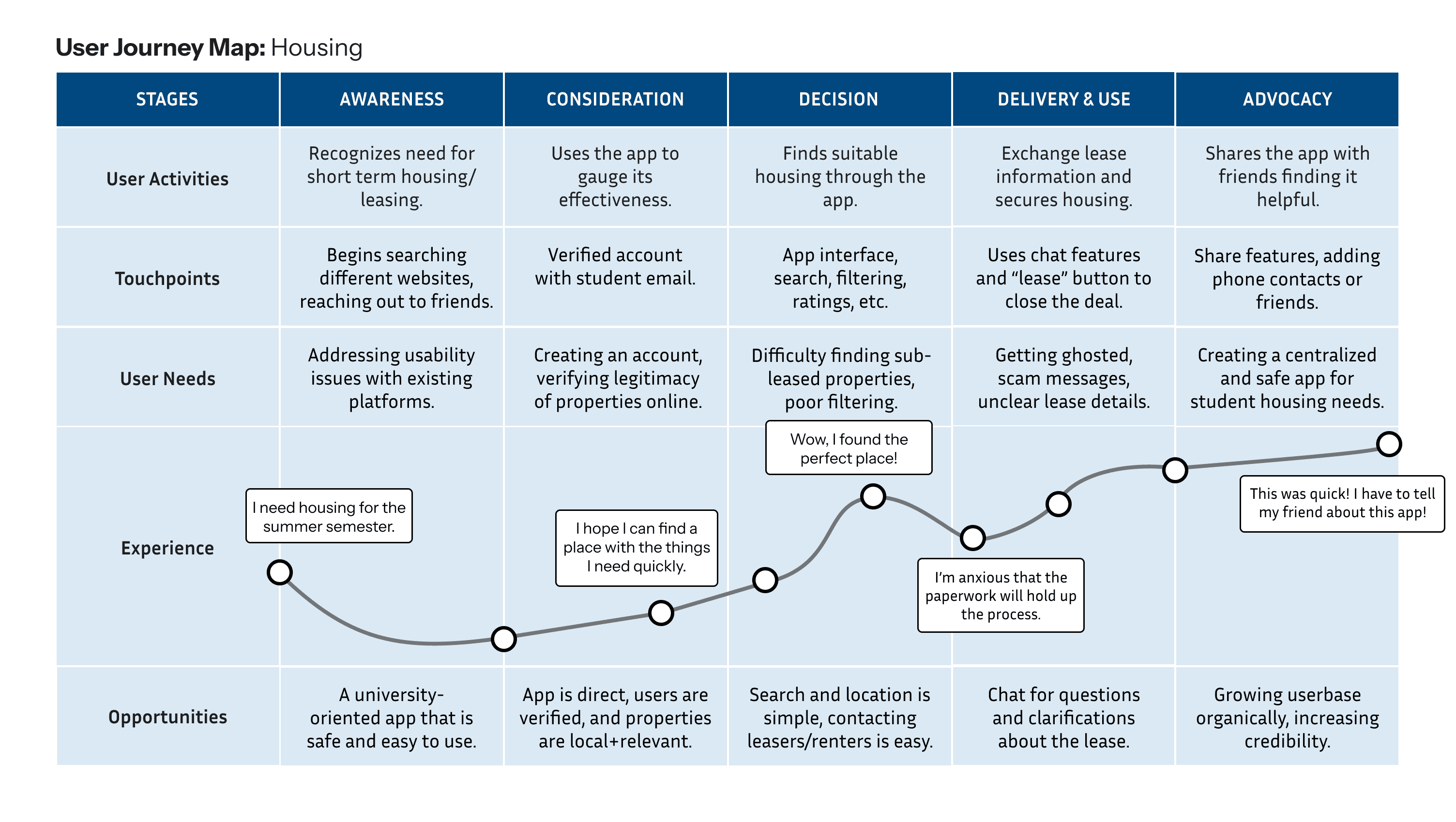
My priority was creating a reliable, functional platform, in turn this would support faster property location/hand-over.
Students often seek to sublease from verified, reliable, and relevant individuals → University email verification ensures an individual's identity and reliability.
Existing platforms lacked sublease-specific filtering or hand-off → Structured listing, filtering, and in-app agreement facilitation.
Most users searched on mobile → Mobile-first browsing and posting
Additionally, comprehensive and relevant filtering specific to sub-leasing: Move-in/out, roommate, furnished, and map filters
ITERATION
Using Figma Make, the first prototype tested user reactions and baseline features.
The second iteration focused on coordination credibility and usability, and introduced new features based on user feedback such as improved filtering, map-based browsing, roommate profiles, university-specific branding and options, and a clearer listing structure.
The final iteration was improved further and received positive feedback from interviewees.
BUSINESS METRICS
RamLease possesses a unique position in the market: higher coordination quality within a constrained university network.
recurring semester turnover
localized supply/demand
identity proximity
repeated short-term housing cycles
Potential success metrics included:
time-to-match
successful sublease completion rate
repeat usage
verified listing rate
reported coordination confidence
REFLECTION
The ability to problem solve and address gaps in the market led to the creation of a high-demand app. Both students and property managers expressed great interest in our app.
The prototypes explored coordination reliability through:
verification
structured workflows
listing transparency
But they did not fully address:
lease disputes
payment conflicts
agreement enforcement
tenant rejection
The project ultimately reinforced a broader product lesson:
In informal marketplaces, reducing friction is not enough.
Coordination quality and accountability can matter just as much as speed.